
How to Write Ad Captions That Convert: Frameworks, Examples, and Platform Rules
Most advice about writing captions for ads is actually advice about writing organic social posts. Someone swapped in the word "ad" and called it a day. The result: captions that entertain but do not convert, and ad budgets that fund scroll-throughs instead of clicks.
Paid ad captions operate under a different set of rules. Every impression costs money whether it converts or not. The audience did not choose to see your ad. You have one visible line to earn the second. And the platform will cut off your caption at a character threshold you may not even know exists.
This guide covers the structural frameworks, exact platform rules, and before-and-after rewrites that paid ad captions actually require. By the end, you will have named formulas you can apply immediately, platform-specific character limits that tell you exactly what gets seen, and a clear system for matching caption structure to campaign objective.
Key Takeaways
- Paid ad captions must earn attention and a specific action in a single moment from someone who did not ask to see the ad. Organic caption habits undermine that goal.
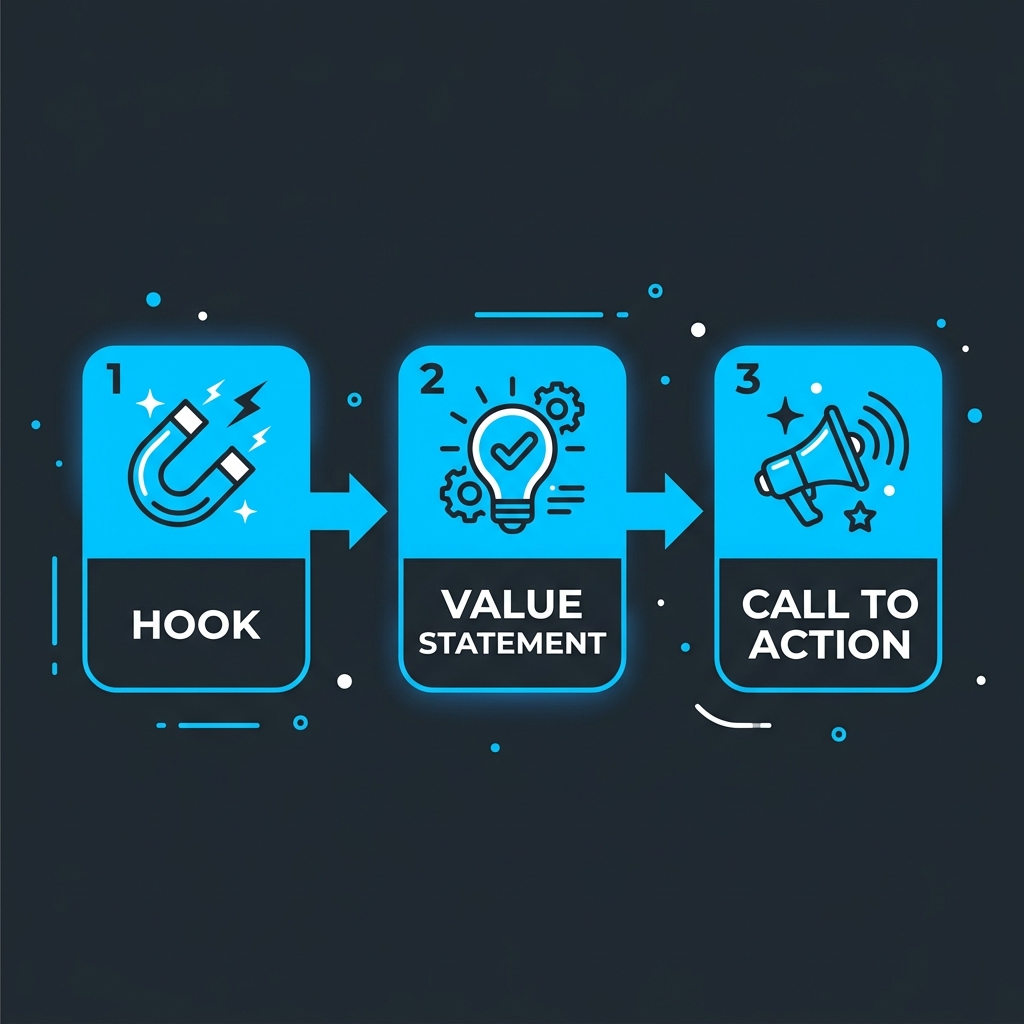
- Every high-converting ad caption has three components in order: a hook that earns the second line, a value statement that gives a reason to act, and a CTA that matches the funnel stage.
- Meta truncates primary text at approximately 125 characters on mobile feed. If your hook and CTA are not in the first visible window, most users never reach them.
- Awareness captions and conversion captions are structurally different documents. Using the same template for both wastes either the cold audience or the warm one.
- Caption formulas are starting points for testing, not conversion guarantees. Isolate one variable at a time: hook against hook, or CTA against CTA.
Why Ad Captions Are Different From Organic Captions (And Why It Matters)
Organic captions build a relationship over time. A brand can spend weeks establishing voice, earning follows, and warming an audience before a caption ever needs to close a sale. The reader already opted in.
Paid ad captions do not have that runway. The audience is a stranger who did not ask to see your ad. The context is purchased. The attention window is measured in milliseconds. And the single job of the caption is to move that stranger toward one specific action: a click, a signup, a purchase.
The habits that produce great organic captions actively work against paid ad performance:
- Leading with brand voice instead of the reader's problem. Organic captions can open with personality because the audience already likes the brand. A cold ad audience needs a reason to care before they will tolerate a personality.
- Burying the CTA. Organic captions can put the call to action at the end because engaged followers read to the bottom. Paid ad captions get truncated. If your CTA is in line four, most mobile users never see it.
- Writing for engagement signals. Organic content is optimized for likes, comments, and shares. Ad copy is optimized for clicks and conversions. Those are different actions that require different structures.
Here is the same product written both ways:
Organic caption: "Glow season is here. Tag a friend who needs this. #skincare #selfcare"
Paid ad caption: "Dry skin by noon? This serum locks in moisture for 12 hours. Shop now."
The organic version builds community. The paid version names a problem, delivers a specific benefit, and closes with an action. Same product. Completely different jobs.
If you are writing paid ad captions the way you write Instagram posts, you are leaving real performance on the table.
The Anatomy of a High-Converting Ad Caption
Every paid ad caption that reliably drives action is built from three components in a specific order. Miss one and the caption loses its structural integrity.
Hook. The first line of your caption decides whether the second line gets read at all. In a paid ad, the hook must accomplish in one sentence what a brand has pages to do organically. The most effective hooks name the reader's problem or desired outcome specifically. "Tired of running out of storage?" outperforms "Introducing our new cloud solution" every time because the first line speaks to the reader's reality before it asks for anything.
Value Statement. Once the hook earns attention, the value statement gives the reader a reason to act. This is not where you list features. It is where you name the specific benefit, result, or transformation the reader gets. "Back up 1TB automatically with no monthly fees" is a value statement. "Industry-leading cloud technology" is not.
CTA. The call to action must match where the reader is in the funnel. "Learn more" is appropriate for an awareness ad because it asks for curiosity, not commitment. "Buy now" belongs on a conversion ad because the reader is ready to transact. Mismatching the CTA to the funnel stage costs clicks even when the hook and value statement are strong.
Annotated example (fitness app):
"Running three times a week and still not seeing results? [Hook] Most training plans ignore recovery. Ours builds it in, and members average 4 more active days per month. [Value Statement] Start your free trial today." [CTA]
The hook names the reader's frustration. The value statement introduces a specific differentiator with a concrete number. The CTA asks for one low-friction action.
Quick-reference summary:
- Hook: Names the reader's problem or desired outcome in the first line. Audience specificity beats generic openers every time.
- Value Statement: Names the specific benefit, result, or reason to act. Concrete and measurable beats vague and impressive.
- CTA: Matches the funnel stage. Awareness gets curiosity-based CTAs. Conversion gets direct action CTAs.
Platform-Specific Ad Caption Rules: Meta, TikTok, YouTube, and Google Display
Platform rules are not optional context. They determine whether a caption is read at all. A caption written without knowing the truncation threshold is written blind.
Here are the exact constraints across the four major paid ad platforms:
| Platform | Caption Field | Character Limit | Truncation Point | Tone Guidance |
|---|---|---|---|---|
| Meta (Facebook/Instagram) | Primary Text | 125 chars visible | ~125 chars on mobile feed | Direct, benefit-first |
| TikTok Ads | Ad Text | ~100 chars | ~80 chars before "more" | Conversational, native-feeling |
| YouTube Ads | Video Description / Overlay | Varies by format | First 100 chars most visible | Problem-framing, curiosity-led |
| Google Display | Headline + Description | 30 / 90 chars | No truncation within limits | Concise, single benefit + CTA |
Meta Ads (Facebook and Instagram): The primary text field shows approximately 125 characters before mobile feed truncation kicks in. Stories and Reels have different display behaviors, with text overlays sometimes showing even less before the reader must tap to expand. Write the hook and the most critical benefit into that first visible block. Do not save the CTA for line three.
TikTok Ads: Caption text appears below the video in a field that truncates around 80 characters before the reader sees a "more" prompt. The tone that performs best feels native to the platform: conversational, direct, and not polished in a way that signals "ad." Overly branded copy stands out for the wrong reason in a TikTok feed. According to TikTok's creative best practices, aligning your caption tone to organic content style improves ad recall significantly.
YouTube Ads: The distinction matters here. The video description is one field; overlay text and bumper ad copy are separate. For skippable pre-roll, the first 100 characters of the description carry the most visibility. Problem-framing and curiosity-led openers outperform hard sells on a platform where the viewer is actively trying to reach something else. If you want technical guidance on formatting caption files for YouTube videos rather than copywriting strategy, the GotReach guide to adding captions to video covers the mechanics in detail.
Google Display Ads: There is no soft truncation here. The headline field holds 30 characters. The description field holds 90 characters. Those are hard limits, and every character counts. The structure that works is simple: one specific benefit in the headline, one supporting detail or urgency signal in the description, one direct CTA embedded in both. Multi-benefit copy fails here because there is no room for it.
The mobile-first truncation problem applies across every platform except Google Display. Write your hook and CTA into the visible window. If a user has to tap "more" to find your reason to act, most of them will not.
Matching Your Caption Style to Your Campaign Objective
Using the same caption structure regardless of funnel stage is one of the most common and costly ad caption mistakes. A conversion caption on a cold audience feels pushy. An awareness caption on a warm retargeting audience wastes the relationship that has already been built.
Here are four captions for the same product (a project management tool built for freelancers), one per funnel stage, with one line explaining the structural choice:
Awareness: "Most freelancers lose 6 hours a week chasing client updates. There is a faster way." Structure: Opens with a striking, audience-specific number. Ends with curiosity, not a close. The goal is the next impression, not the purchase.
Consideration: "Unlike generic project tools, this one was built around how freelancers actually invoice, communicate, and deliver. See the difference." Structure: Leads with differentiation from the category. Reader knows the product type; they need a reason to prefer this option.
Conversion: "Close more projects this month. 14-day free trial, no credit card required. Start today." Structure: Specificity and low-friction commitment. CTA appears early. Every word reduces the barrier to the next click.
Retargeting: "Still thinking about it? Most freelancers who try it close their first project faster in week one. Come back and start free." Structure: Acknowledges implicitly that the reader has seen the brand. Leads with social proof to reduce hesitation. Lowers the commitment threshold before asking for the action.
The product does not change. The caption structure changes because the reader's relationship to the brand changes at each stage.
Common Ad Caption Mistakes (And How to Fix Them)
These mistakes are structural, not creative. A writer with good instincts can still make all four because the platform mechanics are counterintuitive. The fix is concrete in every case.
Mistake 1: The caption describes the image instead of adding a hook
Weak: "Our project management tool for freelancers. Sign up at freelanceflow.com."
Strong: "Chasing three client emails before noon? There is a better system. Try it free."
Fix: The weak version restates what the ad creative already shows. The strong version names the reader's daily frustration, which the image reinforces visually rather than duplicates.
Mistake 2: The brand is the hero instead of the customer's problem
Weak: "FreelanceFlow is the most powerful project management tool on the market. Built for serious professionals."
Strong: "Your clients want updates. Your projects want structure. You want to actually finish work. FreelanceFlow handles all three."
Fix: The rewrite opens by naming what the reader wants, not what the brand claims to be. The brand earns its mention by being the answer to the reader's stated needs.
Mistake 3: The CTA is buried past the truncation point
Weak: "Managing freelance projects across multiple clients is stressful, time-consuming, and often chaotic. FreelanceFlow gives you one clean dashboard to track deadlines, send updates, and invoice faster. Trusted by over 5,000 freelancers worldwide. Start your free trial today."
Strong: "One dashboard for every project, client, and invoice. Start free today. Trusted by 5,000+ freelancers."
Fix: The original CTA appears after roughly 220 characters, well past mobile truncation on every major platform. The rewrite puts the CTA in the first visible block and moves social proof behind it rather than in front of it.
Mistake 4: The same caption runs unchanged across all platforms
Weak: (Same 180-character Meta caption copy-pasted into TikTok Ads Manager and Google Display.)
Strong: Meta version at 120 characters with a direct CTA. TikTok version at 75 characters with a conversational opener. Google Display headline at 28 characters, description at 85.
Fix: Each platform is a different conversation with different constraints and a different audience posture. The same copy adapted to length and tone is always more effective than copy that was never adapted at all.
Ad Caption Formulas You Can Use Right Now
Formulas exist to eliminate the blank-page problem, not to guarantee performance. A formula gives you a structure that has worked before across enough campaigns to be worth testing first. The version that works for your specific audience and objective comes from iteration, not from the formula alone.
Test one variable at a time: hook against hook, or CTA against CTA. Changing both simultaneously makes the result unreadable.
1. Hook-Value-CTA Template: [Attention-grabbing problem or specific claim] + [Concrete benefit] + [Clear next step] Example: "Tired of invoicing by hand? FreelanceFlow sends professional invoices in under 60 seconds. Start your free trial." Best for: Conversion campaigns and retargeting. This is the baseline structure for most direct-response ads.
2. Problem-Agitate-Solve (PAS) Template: [Name the problem in one line] + [Make it feel urgent in one line] + [Offer the solution] + [CTA] Example: "Late project updates cost you clients. Every missed deadline chips away at the relationship. FreelanceFlow sends automatic status updates so you never miss one. Try it free." Best for: Mid-funnel consideration ads where the reader understands the problem but has not committed to a solution. The PAS framework is a proven direct-response structure worth understanding beyond ad copy.
3. Specificity Formula Template: [Number or measurable result] + [Audience] + [Outcome] + [CTA] Example: "47 freelancers closed more projects last month using this one tool. Start free today." Best for: Retargeting and consideration campaigns. A specific number reads as evidence, not a claim. The reader's brain processes it differently than a superlative would.
4. Social Proof Formula Template: [Customer result or quote fragment] + [Product connection] + [CTA] Example: "'I stopped losing track of projects the first week.' FreelanceFlow gives every client their own dashboard. See how it works." Best for: Retargeting and lower-funnel consideration ads where a peer outcome lowers hesitation better than a brand claim would.
Once you have a formula that converts, the next challenge is applying it consistently across volume. GotReach produces up to 300 videos in approximately 30 minutes from a single idea, which means once your caption framework is proven, the bottleneck was never creativity. It was production. See how GotReach helps businesses and creators publish at scale.
If you want AI to help draft caption variations faster, the GotReach guide to AI caption accuracy and tool selection covers what AI accelerates and where it still needs a human judgment layer.
Put Your Caption Frameworks Into Production
You now have the structural framework, platform rules, and formulas that paid ad captions actually require. The organic-social habits that produce scroll-throughs instead of clicks have a specific fix: a hook that earns attention, a value statement with a concrete benefit, and a CTA that matches where the reader sits in the funnel.
The gap between writing one strong caption and applying a proven framework across hundreds of videos is a production problem, not a creativity problem. GotReach eliminates that gap, with bulk video creation from a single idea, distribution across seven platforms from one workflow, and a free tier that supports 30 videos per month with no watermarks.
Start your 30-day free trial today and apply these frameworks at the scale your ad strategy actually needs.
Frequently Asked Questions
How long should an ad caption be? It depends on the platform and campaign objective. On Meta, write your most critical content into the first 125 characters because mobile feed truncates there. On TikTok, aim for 80 characters or fewer before the "more" cutoff. On Google Display, you have 30 characters for the headline and 90 for the description, with no soft truncation. For awareness campaigns, shorter curiosity-based captions often outperform longer ones. For conversion campaigns, every word should reduce friction, which usually means concise and direct regardless of platform.
What is the difference between a caption and ad copy? In practice, the terms are often used interchangeably for paid ads. The meaningful distinction is structural: ad copy broadly includes all written elements of an ad (headline, body, caption, CTA). A caption specifically refers to the text that accompanies an image or video in the ad placement, distinct from the headline field or overlay text. For paid ads, treating the caption as primary copy rather than secondary description is the strategic shift that changes performance.
Can I use the same caption for Facebook and Instagram ads? You can run the same caption across both within Meta Ads Manager since they share the primary text field. But the placement behavior differs: Stories and Reels display text differently than feed placements, and creative that performs in feed may not translate to a full-screen vertical environment. Within Meta, the caption can be shared. Across platforms (Meta versus TikTok versus YouTube), the same caption will almost always underperform compared to one adapted for each platform's constraints and audience posture.
How do I write a caption for a video ad? Start with the hook. The caption needs to earn attention before the viewer decides whether to watch or skip. For skippable pre-roll on YouTube, the first 100 characters of the description carry the most visibility. For TikTok video ads, the caption below the video should feel native to the platform, not polished in a way that signals "advertisement." Match the caption's energy to the video content, but make sure the caption adds new information (a problem statement, a benefit, a reason to keep watching) rather than describing what the viewer can already see.
Should ad captions be funny or direct? The campaign objective decides this, not preference. Humor works for awareness campaigns where the goal is to earn the next impression and build brand familiarity with a cold audience. Direct copy works for conversion campaigns where the reader is ready to act and friction is the enemy. The mistake is defaulting to one register for all campaign types. A funny retargeting ad that fails to address the warm audience's hesitation misses the opportunity that retargeting is built to exploit.
How do I test whether my ad caption is working? Run a structured A/B test and isolate one variable at a time. Test hook against hook first: keep the value statement and CTA identical, and change only the first line. Once you have a winning hook, test CTA against CTA. Changing multiple elements simultaneously makes it impossible to know which change drove the result. Most ad platforms support split testing at the ad level. Set a clear metric before the test starts (click-through rate for awareness, conversion rate for purchase campaigns) so the winner is determined by the objective, not by feel.